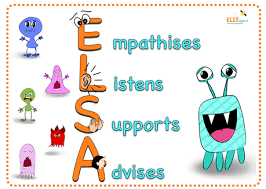
Emotional Literacy Support in School (ELSA)
We are very pleased to share some information about the Emotional Literacy Support we offer here at Downsway. Here we explain what an ELSA is and does. We also offer ideas and helpful advice on how you can help your child; suggest recommended books which you may find useful; and provide links to other websites for self-help at home.
What is ELSA?
ELSA stands for Emotional Literacy Support Assistant.
Children sometimes face challenges that can affect how they feel and how they engage with learning. We know that children learn best when they feel safe, happy, and supported, and ELSA helps us to nurture these emotional and social needs. Children may, for example, need support in recognising and managing their emotions, raising their self-esteem, resilience or improving peer relationships. They may need help in recovering from significant loss or bereavement or in developing ways to resolve conflict effectively. ELSAs are trained to plan and deliver programmes of support to children who may be experiencing temporary or long-term additional emotional needs.
Our ELSAs, Mrs Saunders and Mrs Roberts, are specially trained to support children’s emotional wellbeing. They have completed training with the West Berkshire Educational Psychologists team and continue to receive regular supervision from an Educational Psychologist to guide them in their work. ELSA’s provide the time and space for pupils to think about their personal circumstances and how they manage them.
Our ELSA’s work with children individually or in small groups, offering support that is tailored to each child’s needs.
ELSA Sessions
ELSA programmes usually run for 6–8 weeks, although this can vary depending on the child.
Sessions are designed to be relaxed, supportive, and engaging. Activities may include:
- Talking and listening
- Games and role-play
- Stories, often with props and follow up activities.
- Arts and crafts
- Mindfulness and relaxation
- Physical activities, including sport and use of playground equipment
Sessions usually take place in our ELSA room, which is a calm and welcoming space where children can feel safe to share and explore their thoughts and feelings. Where possible, sessions are scheduled at a regular time to help children to prepare, routine can be extremely beneficial for their emotional needs.
Our Approach
Building positive relationships is always at the heart of our ELSA sessions.
We aim to help children:
- Feel understood, valued, and supported
- Develop confidence and self-esteem
- Learn ways to manage emotions and challenges
ELSA is not about fixing problems for children. Instead, it helps them to develop their own strategies and find ways forward, with guidance and encouragement. What we can do is provide emotional support. We aim to establish a warm, respectful relationship with a pupil and to provide a reflective space where they are able to share honestly their thoughts and feelings.
Areas of Support
ELSA can support children with:
- Anxiety and worries
- Recognising and managing strong feelings
- Behaviour and emotional regulation
- Friendships and social skills
- Self-esteem
- Bereavement and loss
- Conflict and problem solving
- Relationship difficulties
- Real-life problem-solving skills
Referrals
If you have any concerns about your child’s emotional wellbeing, please speak to your child’s class teacher in the first instance.
Children may be referred to ELSA by their class teacher. Our ELSA team also works closely with Mr Edward, our Inclusion Manager, to identify children who may benefit from support.